
By: Brian Harris
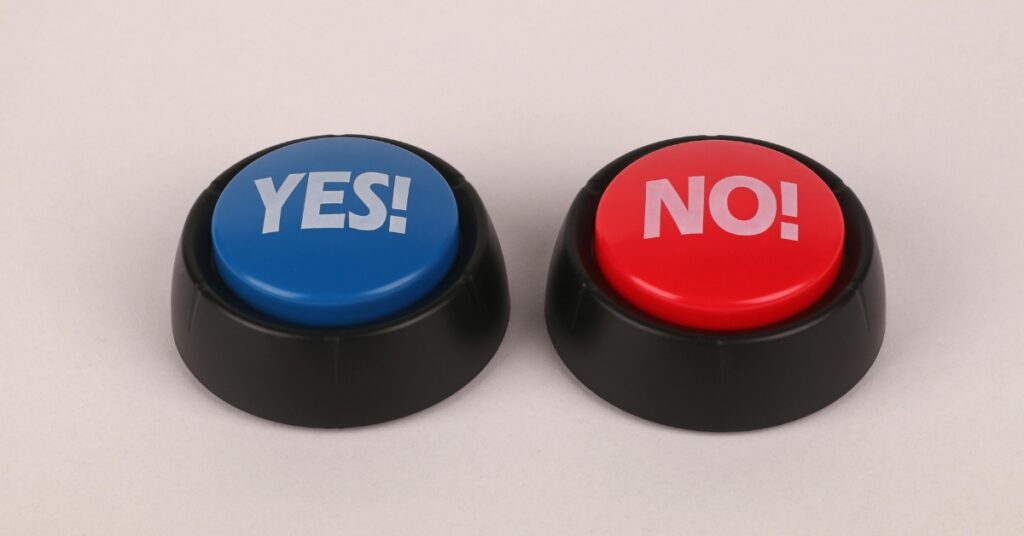
I’ve always been intrigued by Jesus’ instruction, “Let your ‘Yes’ be ‘Yes,’ and your ‘No,’ ‘No’; anything beyond this comes from the evil one” (Matt 5:37).
It’s refreshingly simple, and an invitation to engage in straightforward speech and make promises that can be trusted. If I say ‘Yes, I will do that’ I should do it. If I need to add 25 qualifiers (provided the weather is good, or I don’t get a better offer, or…), I am in real danger of becoming untrustworthy – someone whose word never means anything more than “perhaps”.
What Jesus Isn’t Saying
Now there are things that I don’t think Jesus means when he says this. I don’t think it is a prohibition on curiosity (“don’t ask me why, I have already said no”). Nor do I think it is glorifying monosyllabic communication, where we refuse to allow others to understand our way of thinking and we keep them at arms length – simply cutting them off with a ‘yes’ or a ‘no’.
Context: Oaths, Evasion, and Speech that Reveals
When understanding any passage of Scripture, context is important. In this instance it is Jesus warning against making oaths that look good, but which you are unlikely to keep (Matt 5:33-37). Jesus was beyond exasperated at the practice of making promises which could be easily broken – often by appealing to some supposedly noble cause that was simply an escape route from responsibility. His point is simple. Speech is supposed to reveal, not conceal. Beware those whose words have hidden meanings, or who use noble words to gloss over deep wrongs. Speech should accurately reflect your intentions, and if it does not, it “comes from the evil one”.
Now many may think this is a not very subtle jab at politicians who use thousands of words to say nothing, or to hide the real issues. The old joke goes, “How do you know when a politician is lying?” Answer: “Their lips are moving.” Ouch. Yes, that is the kind of situation Jesus is trying to avoid – let ‘Yes’ be ‘Yes’ – Let ‘No’ be ‘No’.
Values as the Anchor of Clear Decisions
A while back someone did something to me that was clearly wrong. An indignant and well meaning friend immediately dived in with some advice on how I should retaliate.
“No – no I’m not going to do that,” I replied.
“But why not?” he asked. “In the circumstances it’s a relatively mild response. You can’t just let them get away with it.”
I paused for a moment, considered his view, and then said again. “No – no I’m not going to do that.”
“But why not?” he asked again.
I paused and thought some more, and then said, “Because I wouldn’t be me if I did that. It’s just not who I am. And just because someone else behaved badly doesn’t mean I should as well.”
“Hmmm. perhaps,” he replied, clearly not fully convinced.
I think ‘No’ is ‘No’ and ‘Yes’ is ‘Yes’ when our values guide our decisions. And Jesus (as always) is right; anything more in those circumstances comes from the evil one. Saying more feeds the temptation to back away from who we are and what our commitments are, especially if holding to our yes or no has become a little difficult.
Now naturally I am not pushing for the dangerous or the reckless. Just because you said ‘Yes’ to a husband who beats and torments you, does not mean that you are forever saddled with that tragic ‘Yes’. Sometimes our ‘Yes’ must turn into the firmest ‘No’. Sometimes…
A Practical Invitation: Review Your Recent “Yes” and “No”
So why this post? I don’t think we are at risk of failing to realise that there are times when ‘yes’ can (and should) become ‘no’. I think the greater risk is that we are forgetting that words are not meant to be twisted. That promises should be linked to values. That if we need endless words and explanations to justify a decision, it’s usually a warning that the decision is poor.
Why not think over 4 or 5 recent decisions that you have made? What led you to decide as you did? Was it for purely pragmatic reasons. If so, pragmatism might be an adequate reason for those decisions to change. But which of your decisions flowed directly from your values? Ah… this is where the amber warning light starts to flash. When pragmatism steers you away from your value based decisions ask yourself, “At what point do I stop becoming me. Because if I no longer hold to my values, who am I?”
And why not aim for a week where ‘Yes’ is ‘Yes’ and ‘No’ is ‘No’ – and you delight in the simplicity and responsibility of this…
Article supplied with thanks to Brian Harris.
About the Author: Brian is a speaker, teacher, leader, writer, author and respected theologian who is founding director of the AVENIR Leadership Institute, fostering leaders who will make a positive impact on the world.
Feature image: Canva