
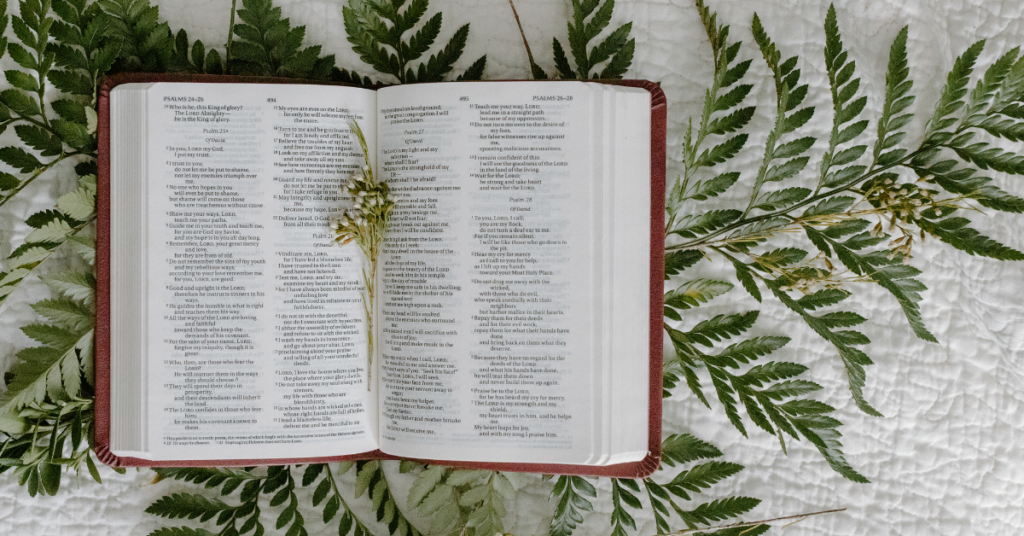
Why two Christians can read the same Bible and disagree
Have you ever wondered how two sincere Christians can read the same Bible and come away with completely different ideas about God? Or listened to two different Christian podcasts that seem to contradict each other in their teaching? Questions like these reveals why spiritual maturity matters and why the Apostle Paul warned believers against being “tossed by every wind of doctrine” (Ephesians 4:14). This phrase might sound unusual, but it speaks directly into the challenge of staying grounded in God’s truth.
What Does “Every Wind of Doctrine” Mean?
Pastor Adam Ramsey explained that Paul is describing spiritual immaturity. In Ephesians 4, he speaks through the metaphors of children, waves and powerful winds to illustrate what happens when believers are not grounded in God’s truth.
Imagine a small dinghy caught in the middle of a storm. It has no control over where it goes. The waves push it one way, then another. Or picture a leaf being blown through the air by every gust of wind. That’s the image Paul is painting.
Adam explains that a spiritually immature person can be easily swayed by whatever opinion or cultural trend comes along. Their beliefs shift depending on the latest book they read, podcast they listen to or speaker they hear.
“Paul wants us to come to a place where we’re grounded in our theological convictions,” he shared.
Why Does Paul Compare Spiritual Maturity and Children?
At first glance, Paul’s comparison to children might sound harsh. Especially because didn’t Jesus call His disciples to have childlike faith?
Children are naturally trusting. That’s one of their strengths. But it can also make them vulnerable. They haven’t yet developed the wisdom to evaluate every claim they hear. Paul isn’t criticising their innocence or trust. Rather, he’s highlighting their lack of discernment and spiritual maturity.
In the same way, spiritually immature Christians can become vulnerable to every new idea, trend or teaching they encounter. So, while God calls us to trust Him with childlike faith, He also calls us to grow in wisdom and understanding.
Why Are Christians Vulnerable to False Teaching?
This spiritual maturity Paul describes in Ephesians 4 isn’t just to convict us. It is also to warn against false teachers. Charles Spurgeon captures this idea like this:
“Discernment is not merely the ability to tell the difference between right and wrong, but between right and almost right.”
Right and almost right. That’s a fine line to cross.
In the Garden of Eden, Satan didn’t begin by completely denying God’s Word. He just led Eve to question it. It wasn’t right, but it was almost right.
When we are unable to differentiate the lies, our understanding of the gospel can become poisoned and shallow. Adam used an analogy of a perfectly cooked meal. When even a little bit of poison is added, it becomes dangerous.
Most of us could pick out an idea that directly contradicts Scripture, but when it is watered down, diluted and sandwiched in between truth, can we recognise the difference?
This is why discernment matters. It helps us recognise the difference between what is genuinely true and what is just convincing.
How Do We Remain Spiritually Mature?
Now more than ever we have countless resources and technologies available to help us grow in our faith. This is a wonderful opportunity, but it also requires wisdom. Not every confident voice is a trustworthy voice. Not every viral clip represents sound biblical teaching.
Adam points out that Christians are called to become settled in their convictions about Jesus and the Gospel. To become spiritually mature and not “swayed to and fro by the waves” we have to come back to the Bible. “We only ever know God as much as we know His word,” he shared.
When we study the Scripture and know His Word, we learn to discern and test what we hear against the truth. This is exactly what spiritual maturity is all about.
The Goal Isn’t Knowing Everything
Thankfully, Paul isn’t calling Christians to become theology experts. Adam acknowledges that none of us will ever know everything about God, and what a blessing this is! We have the privilege of spending our entire lives growing in our understanding of Him.
Instead, spiritual maturity means becoming grounded in the person and work of Jesus Christ. As Adam puts it, “We don’t graduate gospel doctrines, we just mature into them.”
Sometimes we can assume spiritual maturity means moving beyond the basics of the gospel. But Paul teaches the opposite. We can never outgrow the gospel. Instead, we slowly learn how it can transform every area of our life.
Article supplied with thanks to Vision – a non-profit, follower-funded Christian media ministry taking God’s Word to every corner of Australia and beyond through broadcast, online and print media.
Feature image: Canva